Synthetic putting green: How to get better at golf at home
If you’re wondering how to get better at golf without always heading to the driving range or golf course, investing in a synthetic putting green at home is one of the most effective solutions. Practising on your own artificial putting surface allows for consistent training, all-year usability, and a true-to-life golf experience that sharpens your short game and lowers your handicap.
Table of contents
- What is a Synthetic Putting Green?
- Benefits of a Synthetic Putting Green for Golf Practice
- How to Choose the Best Synthetic Putting Green
- Top Tips for Installing a Synthetic Putting Green at Home
- How to Practise Like a Pro on Your Synthetic Putting Green
- FAQs About Synthetic Putting Greens
What is a synthetic putting green?
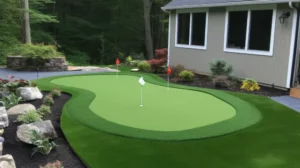
A synthetic putting green is an artificial turf surface designed to mimic the feel and roll of natural grass on a golf course. Made from durable materials such as nylon, polypropylene or polyethylene, it offers a low-maintenance, long-lasting alternative for golfers who want to practise putting, chipping, and short game drills from the comfort of their home or garden.
Whether you choose a portable indoor putting mat or a professionally installed outdoor synthetic green, these surfaces provide realistic ball speed, slope, and responsiveness—perfect for building confidence and improving your putting skills.
Tip: Synthetic putting greens help golfers practise at home with low maintenance and realistic gameplay, boosting performance over time.
Benefits of a synthetic putting green for golf practice
1. Year-round access to practice
Rain or shine, a synthetic putting green stays playable. No more waiting for good weather or tee times.
2. Realistic ball roll
High-quality fake grass putting greens replicate the feel of natural turf, giving you an authentic putting experience.
3. Low maintenance
Forget mowing, watering, or fertilising. These greens only need occasional brushing and surface cleaning.
4. Cost-effective over time
Although the initial setup may require investment, synthetic greens save on club fees, travel costs, and time in the long run.
5. Custom design options
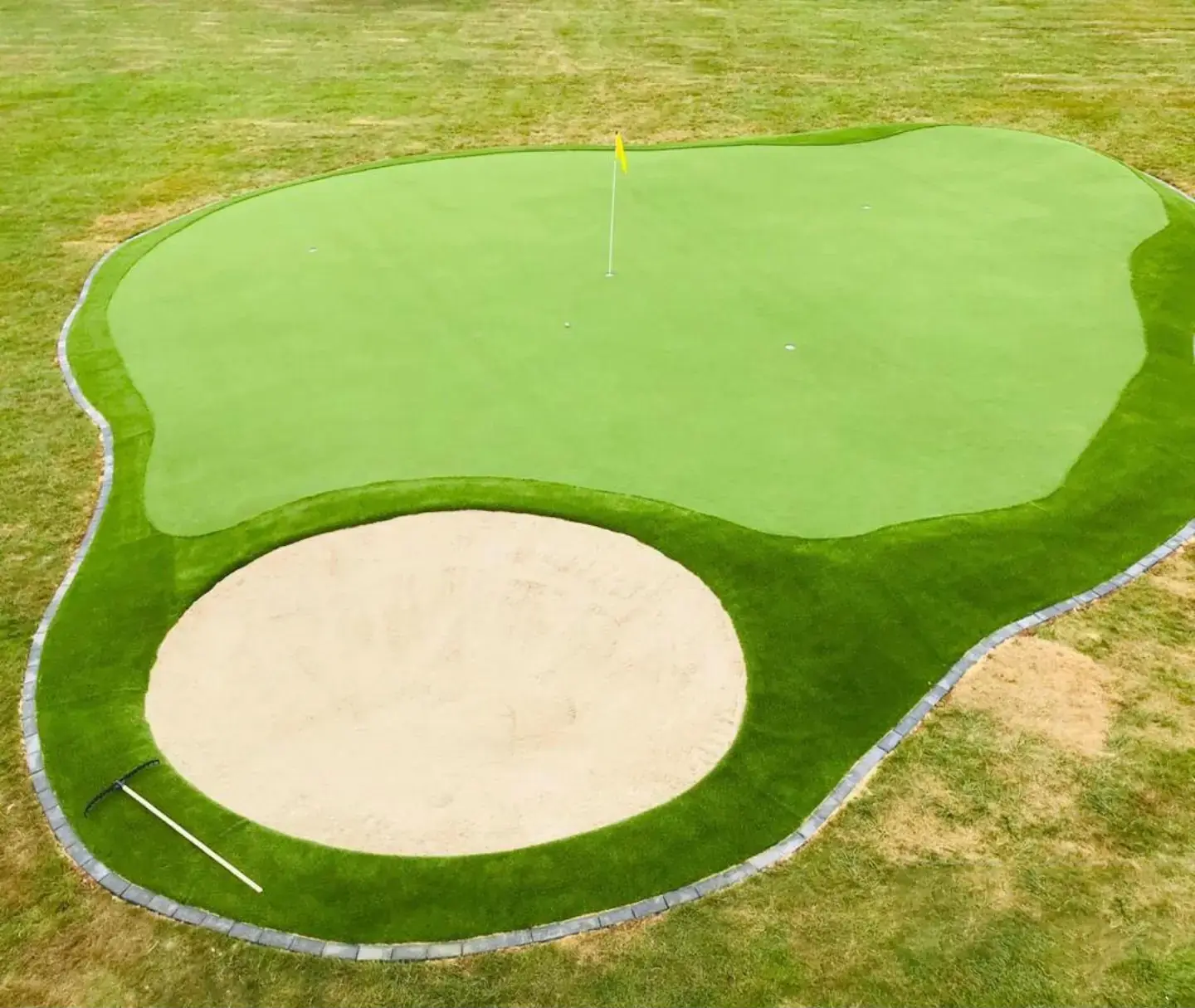
Add slopes, breaks, bunkers or even fringe turf to simulate real course scenarios at home.
Tip: Home golf greens made from synthetic turf give you year-round access, improve consistency, and reduce maintenance costs.
How to choose the best synthetic putting green
1. Choose the right turf material
Look for dense, short-pile turf made from nylon or polyethylene for a true roll. These materials offer durability, UV resistance, and realistic feedback.
2. Consider indoor vs outdoor use
Indoor mats are great for year-round practice, but outdoor installations give you more space and flexibility in training.
3. Think about size and layout
Design your green based on space, training goals and skill level. Include multiple holes, undulations and fringe areas if possible.
4. Check for drainage and foundation layers
A solid base with proper drainage ensures longevity and consistent ball performance for your synthetic putting green.
Tip: Choosing the right turf material and layout ensures your putting green delivers consistent ball roll and long-lasting performance.
Top Tips for installing a synthetic putting green at home
1. Prepare the area
Clear the site of any debris, level the ground, and lay a compacted aggregate or MOT Type 1 base.
2. Use a weed barrier
This prevents natural grass or weeds from growing up through your putting surface over time.
3. Install the turf with care
Lay the turf evenly, secure it around the perimeter, and brush in sand or rubber infill to control speed and bounce.
4. Seam it correctly
For larger installations, ensure seams are tightly joined and glued to maintain a smooth putting surface.
5. Add features for challenge
Incorporate slopes, fringe turf or even artificial bunkers to improve skill development and increase realism.
Tip: A well-installed synthetic putting green starts with proper base prep, accurate turf placement, and optional challenges like slopes.
How to practise like a Pro on your synthetic putting green
1. Use distance drills
Place markers at 3ft, 6ft, and 9ft to practise putts at varying distances. Focus on speed control and accuracy.
2. Work on alignment
Use alignment sticks, chalk lines or laser guides to build muscle memory and stroke consistency.
3. Try the gate drill
Set two tees a putter-head’s width apart and roll the ball through the gate to improve your stroke path.
4. Simulate on-course scenarios
Vary positions, stances and ball placements to replicate real course pressure and build confidence.
5. Track your progress
Record your stats or use a golf training app to monitor improvement over time.
Tip: Practise putting drills like the gate drill and distance markers to master your short game using a synthetic putting green.
FAQs about synthetic putting greens
How long does a synthetic putting green last?
Most high-quality synthetic putting greens can last 10–15 years with proper care and occasional maintenance.
Is a synthetic putting green suitable for beginners?
Absolutely. It’s ideal for beginners to build a consistent putting stroke, practise regularly, and boost confidence.
Can I install one myself?
Yes, many DIY kits are available. However, for best results, a professional installation ensures a true, level surface.
How much does it cost?
Prices vary based on size, features and materials. Small DIY greens start from around £300, while professional outdoor setups can cost several thousand pounds.
Where can I buy a synthetic putting green?
Look Real Lawns offers tailored synthetic putting green solutions perfect for home practice in the UK. Explore our putting greens here.
Final Thoughts
Investing in a synthetic putting green is one of the smartest moves a golfer can make to improve their game. From convenience and realism to long-term value, it provides everything needed to hone your putting skills without leaving home. Whether you’re a weekend golfer or serious about lowering your handicap, a well-designed artificial putting green will make all the difference.
Tip: A synthetic putting green helps golfers sharpen their short game at home—saving time, boosting skill, and offering professional-grade practice.